Monday, January 30, 2012

Another Downton Abbey Banner

I've gotten on a bit of a "Downton Abbey banner roll" lately. I've made another banner, but this one is made with screenshots from Season 1. Click on it for the full size picture.


God Bless,  God Bless, Miss Elizabeth Bennet

Letter Tip #3: Using Commonly Used Words or Phrases- Period Drama Advice Column


Everybody has those little words or phrases that we always use (or overuse sometimes). It's no different with characters in period dramas. Properly working those words and phrases can really make a letter sound like it's coming from the character you're writing as. Below are some examples:

"To be sure..." or "...to be sure" - Various characters in Emma
"My one weakness" or "It's my one weakness" - Dorcas Lane in Lark Rise to Candleford)
"My sister, Mrs. Suckling in Maple Grove" - Mrs. Elton in Emma (she has plenty of common phrases)
"Fiddle-dee-dee!" - Scarlett O'hara in Gone with the Wind
"It's *proper name here*, madam!" - Deborah Jenkyns in Cranford
"...Lady Catherine de Bourgh..." (variations) - Mr. Collins in Pride and Prejudice


Interjections are a great source of commonly used words or phrases. Like I've shown above, Scarlett O'hara from Gone with the Wind says "Fiddle-dee-dee!" quite a bit. While reviewing a period drama or book, try to pin-point the different interjections that you spot: they can be quite useful.

How helpful was this tip? I am requesting some help for this tip: are there any interjections or common sayings that you can think of that would be a good example for writing responding letters?


Other than that, if you have any questions, feel free to leave a comment. I'll try my best to help out.


 God Bless,
 God Bless, Miss Elizabeth Bennet

Sunday, January 29, 2012

I've won the Irresistibly Sweet Blog Award!


Alyianna from Scribbles of a Catholic Teen awarded me the Irresistibly Sweet Blog Award! Thank you, Alyianna for awarding me this award! For this award, I have to:


1. Post 7 random facts about yourself.
2. Then pass it onto 10 other bloggers

So, first thing's first. 7 random facts!

1. I'm currently working on a big sewing project (It's a secret for now, though! I'll post about it when it's done!)
2. I'm currently watching the 2nd season of Downton Abbey (which is good, by the way, though the last episode was quite sad).
3. I have lately (and by lately, I mean last spring) taken to wearing hats.
4. Because I've started to wear hats, I enjoy hat pins!
5. I'm currently taking a class about HTML (though I know enough to use it on my blog)
6. I've finished watching The Duchess of Duke Street.
7. I've started to become interested in 1910s fashion.

There are my 7 random facts. Now I will award this to 10 bloggers:
7. Of Trims and Frills and Furbelows


 God Bless,
 God Bless, Miss Elizabeth Bennet

Thursday, January 26, 2012

New Banner (Finally!)

I've created a new banner! I've been watching the new season of Downton Abbey recently (by the way, good! I'll have to review it soon!) Slight spoiler, but Mary and Matthew sing at a concert together, and for the past week, I've had the song stuck in my head. So I created a banner for it:


 God Bless,
 God Bless, Miss Elizabeth Bennet

Letter Tip #2: On Dialect and Grammar - Period Drama Advice Event


What is useful when writing letters as other characters is using dialect. In some books, dialect is reflected in the way certain words are spelled. They won't be the correct spelling, but rather a phonetic spelling. Some modern day examples would be:


Gonna (Going to)
Wanna (Want to)
Shoulda (Should have)

Obviously, these words are not spelled the same way, but you get a feel of how someone is talking. There are examples of this in classic literature or (if you listen carefully) you might be able to pick up on dialect while watching period dramas and can formulate how to spell the words just by sound.

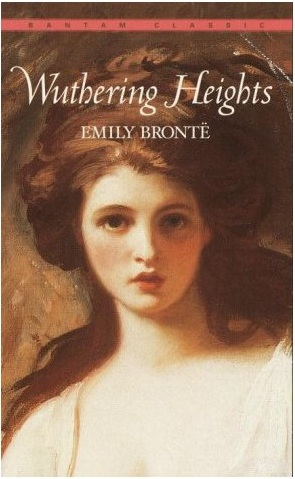
An example of dialect in classic literature is in Wuthering Heights*. There is a character named Joseph that is a servant (not sure if he's in any of the movies, but he is in the book) who talks with a very thick dialect. Here is a sample of his dialogue:


"...Shame on ye! sit ye down, ill childer! there’s good books eneugh if ye’ll read ’em: sit ye down, and think o’ yer sowls!" (Chapter 3)

Because he is talking in a certain dialect that does not sound like, for instance, the Earnshaws that he works for, he would not sound like, "Shame on you! Sit down, ill children! There are good books enough for you if you will read them: sit down and think of your souls!" Writing it this way would not sound like the Joseph that is in Wuthering Heights.

It might help to form what you want to say in proper grammar and then add/replace dialect into your original sentence. For a sentence like:

"There are plenty of great books."

As Joseph, you might say:

"There's eneugh good books for ye to read."

There is more than one way to do this. Try experimenting with sentences and see what you come up with.

***

On a similar subject: grammar. Some characters have great grammar while others do not. Take for example Lucy Steele (Sense and Sensibility). Lucy is - shall we say it? - not the most educated character in literature. Therefore, in her dialogue there are some grammatical errors:

"I was afraid you would think I was taking a great liberty with you," said she, "in telling you all this. I have not known you long to be sure, personally at least, but I have known you and all your family by description a great while; and as soon as I saw you, I felt almost as if you was an old acquaintance..." (Chapter 22)

Right away, you notice that there was a grammatical error: it should be "I felt almost as if you were an old acquaintance". If you include these grammatical errors in your letter, they can really help your letter sound like it is coming from the character you are writing as. Be careful with this though. There are characters that use a lot of improper grammar, but there are also characters that only use enough to give the impression that they are not educated, but their bad grammar is not blatant. Take a look at your character's dialogue and see how their grammar is.
 

*Note: I am not fond of the book Wuthering Heights, but for our purposes here, it does a good job to show how to use dialect.


How helpful was this tip? If you have any questions, feel free to leave a comment. I'll try my best to help out.

 God Bless,
 God Bless, Miss Elizabeth Bennet

Monday, January 23, 2012

Vote for me!

Yet Another Period Drama Blog is holding a Period Drama Button Contest and the finalists have been selected! One of my buttons was selected:


You can vote for my button in one of the polls at Yet Another Period Drama Blog. I ask that you vote for me, but vote for the one that you like ;-).

 God Bless,
 God Bless, Miss Elizabeth Bennet

Letter Tip #1: Using Book/Movie Quotes - Period Drama Advice Event


Here is the first tip for writing responding letters for The Period Drama Advice Event. Keep an eye out for more tips!

Does your character say either in the book or adaptation something that they may say to the asking character? Maybe if you're writing as Dorcas Lane from Lark Rise to Candleford, you might say "Love rarely crosses the great divide of social class" (I will have other examples below). Direct quotes can really help you take a good guess to see what the character's position on a particular matter may be. They also can really make your letter sound like they're coming from the character you're writing as.

Some quotes you might use:
"Love rarely crosses the great divide of social class" - Dorcas Lane (Lark Rise to Candleford)
"Pray, what is your age?" - Lady Catherine de Bough (Pride and Prejudice, 1995)
"So put that in your pipe and smoke it!" - Lady Violet Crawley (Downton Abbey)
"Well, I doubt I'd expect to curtsy to their majesties in June when I'd been arrested at a riot in May. But then I'm old. Things may be different now." - Lady Violet Crawley (Downton Abbey)
"What will people think of her? And worse: what will be said?" - Deborah Jenkyns (Cranford)


You may come across a quote that would go perfectly with the subject of the letter, but it doesn't quite fit into the flow of the letter (such as grammar or even nouns). You can change enough of the quote so the reader may understand what the original quote was and cleverly apply it to the current subject. For instance, let's use a Mrs. Bennet quote. The direct quote in Pride and Prejudice is:

"...if you take it into your head to go on refusing every offer of marriage in this way, you will never get a husband at all..." (Chapter 20)


That quote might be fine for a letter concerning marriage, but what about a business deal? Let's say that Mr. Bingley is writing an asking letter about whether to take possession of Netherfield Park? (Yes, I am aware that Mrs. Bennet and Mr. Bingley are both from the same novel and that that would not be allowed, but this is just an example) What exactly could we change in the quote to fit our topic?


If you take it into your head to go on debating whether or not to take possession of Netherfield in this way, you will never get a wife...erm home at all.


See how we used a quote and fit it into the current topic? It just took a little bit of revising.


How helpful was this tip? If you have any questions, feel free to leave a comment. I'll try my best to help out.


 God Bless,
 God Bless, Miss Elizabeth Bennet

Friday, January 20, 2012

Are These Songs the Same Song? (Little Dorrit, Downton Abbey)

Comments are very much appreciated! This has bothered me for months ever since I first watched Downton Abbey. I remembered when I first watched Downton Abbey: my mom and I were on the second episode and this song came on...


The first thing I thought was "Hey! That song is in Little Dorrit!" I could have sworn that it was the same song!

Watch from 0:00 to 0:44

I am asking for your opinion: are these two songs the same? They seem to have the same melody and the same musical instruments. Comments are welcome! 


 God Bless,
 God Bless, Miss Elizabeth Bennet

Tips on Writing Responding Letters Coming Soon! (Period Drama Advice Event)


Having trouble writing a letter as a period drama character? Having trouble starting your letter? Need some tips? Before the Period Drama Advice Event starts, I will have a series of posts about writing responding letters. Keep on the look out for tips on writing letters.


 God Bless,
 God Bless, Miss Elizabeth Bennet

Thursday, January 19, 2012

Announcing The Period Drama Advice Event!


Today, I am officially announcing the Period Drama Advice Event! Due to the success of both the Jane Austen Advice Column during Jane Austen Week and the Period Drama Advice Column during Period Drama Week, I am going to host an event for the Period Drama Advice Column. The event will kick off on February 13th. I hope you will participate and have fun!

Read about the event here!


 God Bless,
 God Bless, Miss Elizabeth Bennet

Period Drama Advice Event

What would happen if characters from different period dramas could write to each other? Better yet, what would happen if characters from different period dramas could ask each other for advice? What sort of advice would they give? Good? Bad? Average? Maybe they would be of no help whatsoever!

Welcome to Period Drama Advice Event, a four part advice column event for period drama characters.

How it Works:
1) For each part of the event, there will be a letter from a period drama character asking for advice listed on Elegance of Fashion.
2) On your blogs, answer the letter as a character from a period drama character. Make sure to post a copy of the asking letter in your blog post.
3) Leave a comment at Elegance of Fashion in the post of the asking letter (It must be in that post!): the comment should contain the name of the character you're answering, the name of the character you are writing for and the URL of the answering letter post at your blog. For example, if you are responding to an asking letter from Scarlett O'Hara (Gone With the Wind) as Dorcas Lane (Lark Rise to Candleford), the comment should look something like this (note: the URL of the example is for my review of Lark Rise to Candleford, not of a letter post):

Scarlett O'Hara (Gone With the Wind)
Dorcas Lane (Lark Rise to Candleford)
http://elegance-of-fashion.blogspot.com/2010/08/review-lark-rise-to-candleford-series-1.html

It doesn't necessarily have to be exactly like this, but just as long as those pieces of information are in there.

4) I will accept responses for one week. When that week is up, I will open a poll for readers to vote in for their favorite response letter. I will have a post with all the links for that letter for people to read other letters. The poll will last for one week. The person with the most votes will be awarded a small banner or button to put on their blogs when the event ends.

5) If you win a part of the event, leave a comment here at Elegance of Fashion saying whether you would want a small banner or a button, which character you would want on the banner or button, and whether you would want your name/username or blog name on the button. All the winners will receive their buttons one week after the end of the event. If you do not comment by the end of the event, you will not receive a button.

Rules to Keep in Mind
1) As always, keep the letters clean. I won't accept letters that aren't.
2) You can't write as a character from the same period drama as the character in the asking letter. For example, if the letter is from Elinor Dashwood from Sense and Sensibility, you cannot write as Marianne Dashwood.
3) You can enter up to five responding letters (they all must be from different characters, but those characters can be from the same period drama (so long as they're not from the same period drama as the character in the asking letter)). To even make it more interesting, you could have other characters reference other responding letters: for example, "As my dear father mentioned", "Unlike my dear Mrs. Elton", etc.
4) The character you are writing as could be real or fictional, but the character must come from a period drama.
5) You can also make regular comments on the asking letter posts. Those posts are not limited to entries. Feel free to comment!
6) Once a quarter of the event is finished (i.e. We've moved onto the next letter), you may write a responding letter as the character in any of the previous asking letters.
7) You can only win one button per event.

Start Date of Event: February 13th, 2012

Posts
Tips (#1, #2, #3, #4, #5)
End of Period Drama Advice Event
Winner's Buttons

Want to add a button to your side bar or in your posts? Try one of these buttons!

Large Buttons


URL of Image

HTML for Button


URL of Image

HTML for Button


URL of Image

HTML for Button


URL of Image

HTML for Button


URL of Image

HTML for Button


URL of Image

HTML for Button


Small Buttons


URL of Image

HTML for Button


URL of Image

HTML for Button


URL of Image

HTML for Button


URL of Image

HTML for Button


URL of Image

HTML for Button


URL of Image

HTML for Button

Tuesday, January 17, 2012

Yet Another Period Drama Blog's Period Drama Button Contest

Miss Dashwood from Yet Another Period Drama Blog has a new contest for creating a period drama button with a funny saying. I thought I'd take a try at it:

Picture from Cranford, lyrics from Funky Town

Picture gotten from here
Picture from Emma, quote from Downton Abbey ("Well, so what? I have plenty of friend I don't like." - Lady Violet)

Picture from Pride and Prejudice, Quote from Northanger Abbey

Picture from Sense and Sensibility, Quote adapted from Lark Rise to Candleford

I am also going to slowly upload these onto my Tumblr page


 God Bless,
 God Bless, Miss Elizabeth Bennet

Which Jane Austen Secondary Heroine Are You?

I found this quiz at Old-Fashioned Charm about which Jane Austen Secondary Heroine am I. I have taken numerous quizzes about which heroine (and I always end up as Elizabeth Bennet... Hmmm...), but I never took a quiz on the secondary heroines. I took the quiz (and my name got cut off!), and I ended up as...

Miss Elizabeth Bennet (Elegance of Fashi's Result: Jane Fairfax
on quiz: Which Jane Austen Secondary Heroine Are You?


You are Jane Fairfax from Emma!  A shy, pleasant and intelligent young woman, you are easily embarrassed and may or may not be saddled with an aunt who likes to brag on you.  Your taste in men is debatable, but you are a reliable and honorable girl with little nonsense about you.  Life has not treated you as well as it might have, but you deal with problems with good grace and are sure to do well in the end.  You are likable and demurely sweet, and will be a good friend to anyone.

Except I couldn't like Frank Churchill! "How could Jane bear it?!" (Emma, 2009) I don't believe I could! lol! Other than that, Jane Fairfax isn't a bad person. I didn't always like Emma (when I first read it, I found her a little vexing), but by the end I liked her; similarly, Jane and Emma didn't always get along, but by the end they became friends.

Edit: This quiz was created by Miss Dashwood from Yet Another Period Drama Blog 

Have you taken this quiz? What result did you get?


 God Bless,
 God Bless, Miss Elizabeth Bennet

Monday, January 9, 2012

Review: The Duchess of Duke Street - Series 1 (1976)

A while ago, my mom and I began to watch The Duchess of Duke Street. The show was made up of two seasons and was from the 70s. Normally, I don't particularly watch period dramas from the 70s since they aren't up to the standards of period dramas of today are (costuming and scenery wise), but I gave this show a try. I was not familiar with the Edwardian era and had never seen a period drama from the early Edwardian era (Downton Abbey was a little bit past the Edwardian era, and though it is referred to as an Edwardian period drama, it technically isn't.). This weekend, my mom and I just finished Series 1 of The Duchess of Duke Street.
Series 1 Box Art


Synopsis
Louisa Leyton (later Louisa Trotter) wants to become the best chef in England. She first gets a job in a fine house and eventually goes on to buy the Bentinck Hotel. The story is loosely based on the life of Rosa Lewis, a real life cook that was the best cook in London during her time.


Characters/Episode Plotlines
Most recognizably, Louisa is played by the well known Gemma Jones, who is also known for her roles in Sense and Sensibility and Jane Eyre. Robert Hardy (Sense and Sensibility, Middlemarch) makes an appearance in one episode, and so does Joanna David (Pride and Prejudice, He Knew He Was Right). Other than those members of the cast, I didn't recognize anyone else.

Louisa is a very interesting character. She is feisty, sassy, and determined to become the best chef in England. She sometimes gets involved in bad situations, but she keeps going. Small Spoiler Early in the series, she catches the attention of the Prince of Wales (later King Edward VII): in order to keep the prince looking respectable, Louisa is pressured to marry the butler of the house she is working at, Augustus "Gus" Trotter; she relents and marries Gus (on a side note, Gus became a slimy character after they got married; luckily, he was only in the first couple of episodes). I felt that Louisa giving into the pressure was out of character for her: she didn't seem like a person that would give into peer pressure like that and then she does. But after that incident, Louisa doesn't give into peer pressure like she did during that incident. A slip of her character, perhaps? End of Small Spoiler There were ups and downs to Louisa's character. There were some times where I really liked her as a character: she was determined to protect her hotel and her staff and friends. But other times, it was hard to like her: she would become really bossy in some episodes, or really jealous in others. Well, I suppose all characters have their good points and their bad points.

The staff of the Bentinck Hotel
The staff of the hotel is also involved in the main plot too. As the viewer, you get a good glimpse into the lives of Mary, the hotel's maid and Louisa's friend that she met at her first cooking job, Merriman, the hotel's butler, Mr. Starr, the head porter, and his dog Fred, and the other recurring staff members. In a way, the story has some similarities to Upstairs, Downstairs since both the staff and the higher class people are involved in the plot. What is interesting is that in some episodes, you get to hear what the staff thinks of the situation the hotel is in in a particular episode.

Most of the episodes revolve around Louisa, Charles "Charlie" Haselmere (her friend), and the hotel staff, but there are a couple of episodes that focus more on the guests of the hotel. The episodes that were mostly about the hotel guests seemed as if they could have taken place at any point in the series, while with the episodes about Louisa, Charlie, and the hotel staff, they seem to play in chronological order for the most part. Since this story is based off of the life of a real life cook, there are some references during some of the episodes to events in history. Series 1 takes place between 1900 and 1910. There are references made to the death of Queen Victoria and the rise of the Prince of Wales to power and his death.


Scenery
Louisa at her first job
Unlike most shows from the 70s and 80s, this one didn't seem like it was on a sound stage all the time. Now, the video cameras that they used look like they came out of the 70s (I've noticed that with any 70s show, if a candle is lit there's this red streak that follows the flame around -- that streak is present in here), but the set doesn't appear to be a sound stage. There are some outdoor scenes, but most of the time, scenes take place within the Bentinck Hotel.


Costumes
I've never really seen a period drama with fashions from the early Edwardian era (at least before 1910) and I was quite unfamiliar with Edwardian fashions, so the costuming was all new to me. The costuming is very well done. Many of Louisa's outfits are very fancy and pretty, as are some of the guests' outfits. The staff usually has their usual uniforms on (which is to be expected), but sometimes the female staff members go out in nice dresses.


Music/Sound
Love the theme song! The theme song has the style of music that music at the turn of the century would have. Other than that, there really weren't any other songs (save for the alternative credits song, which had a similar style as the theme, but was slower). The sound was mostly clear (though I found Louisa hard to understand at times, but that was probably due to her accent).


Overall: 4/5
I would recommend this show. It's very enjoyable and not dull like some of the other period dramas from the 70s and 80s. There are some implications said about some of the characters, but nothing is shown (there was one scene that could have lead to a bad scene, but nothing happened at all). Louisa does sometimes use some bad language, but it's not that frequent. If I were to give The Duchess of Duke Street a TV rating, I would probably rate it TV-PG. If you're not familiar with the Edwardian era, this would be a good place to start with period dramas.

The Duchess of Duke Street: Series 1 is available on DVD either in the complete collection with both of the shows seasons or on it's own. There are 15 episodes in Series 1 that are about 50 minutes long each.

Saturday, January 7, 2012

Winner of The 2nd Period Drama Heroine Tournament!

The poll closed a couple of days ago. The 2nd Period Drama Heroine Tournament has concluded. The winner is... after a close race...


Margaret Hale (North and South) is the winner!

Anne Shirley -- 46 votes
Margaret Hale -- 52 votes

Thank you everyone for participating in the 2nd Period Drama Heroine Tournament! It has been a success! I apologize that I couldn't get this up sooner. I hope you all had fun!


 God Bless,
 God Bless, Miss Elizabeth Bennet

Monday, January 2, 2012

LolPeriodDramas: Sense and Sensibility, Emma

Added these to the Tumblr page a little while ago. Some more humor.


Oh, I also fixed my background at my Tumblr page. It is ready for viewing!


 God Bless,
 God Bless, Miss Elizabeth Bennet